




How can innovative Nitinol alloys contribute to safer, more reliable and better-performing medical devices? This is one of the key questions addressed by MEDALLOY, a European research and training network bringing together leading academic institutions, clinical experts and industrial partners – including Ingpuls.
MEDALLOY (Advanced Nickel-Titanium Alloys for Medical Device Applications) is a European Doctoral Network funded by the European Union’s Horizon Europe research and innovation programme under the Marie Skłodowska-Curie Actions (MSCA).
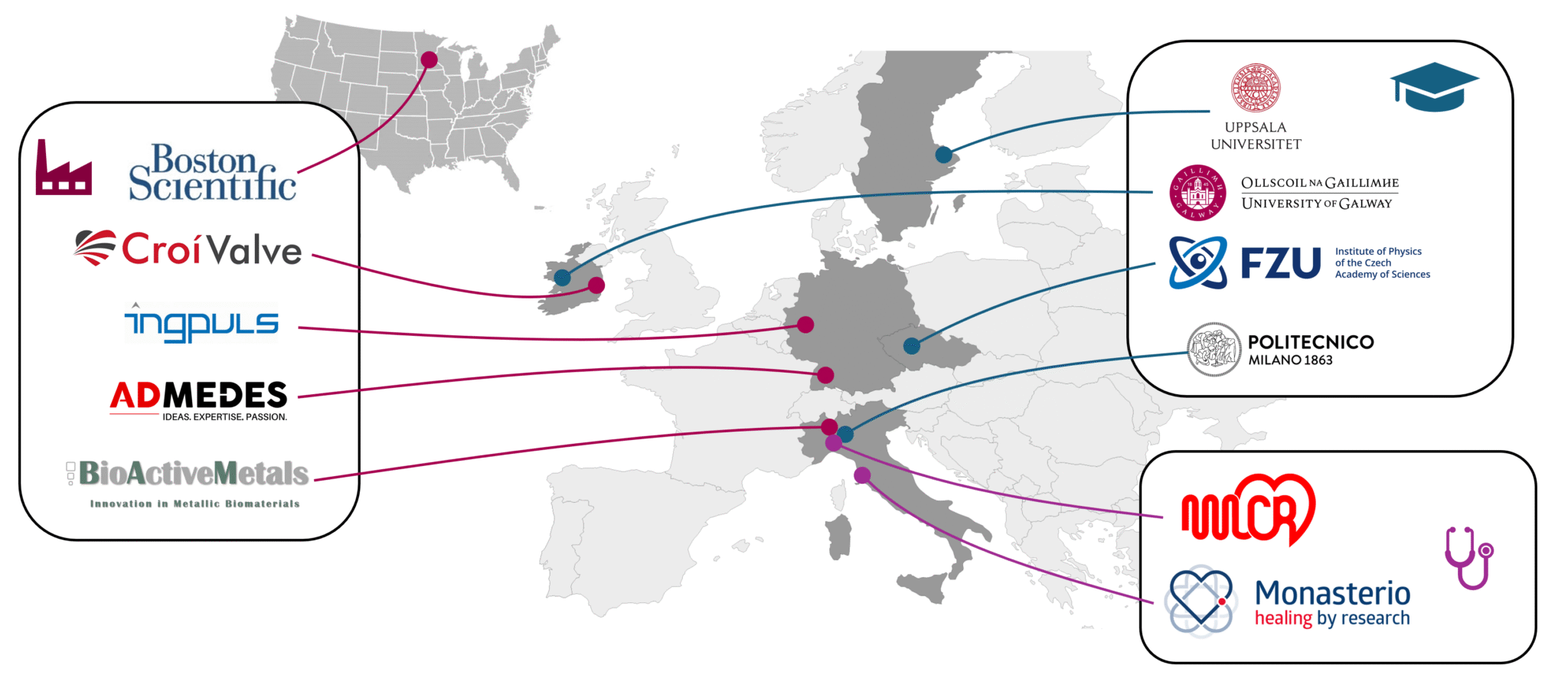
The network brings together partners from six countries, combining scientific research, industrial expertise and clinical perspectives to advance Nitinol-based medical technologies. At the heart of the project are nine doctoral researchers addressing different challenges along the value chain of medical applications – from material development and manufacturing to component performance and clinical applications.
Advancing Nitinol Technology Through European Collaboration
Nitinol has become an important material in modern medical technology. Its unique combination of superelasticity, shape memory properties and biocompatibility makes this nickel-titanium alloy particularly attractive for medical devices such as stents, heart valves and guidewires.
However, as medical applications become increasingly complex, so do the requirements for material performance, reliability and the ability to predict material behavior.
MEDALLOY addresses these challenges through four key research areas:
MEDALLOY’s Four Research Areas
- Advanced Nitinol alloys: Developing new NiTi-based materials with improved functional properties and enhanced fatigue resistance.
- Optimized manufacturing processes: Advancing conventional and additive manufacturing technologies for Nitinol components.
- Fatigue behavior and defect tolerance: Investigating how material defects affect component properties and improving fatigue life prediction.
- Predictive numerical modeling: Developing and validating simulation models to describe Nitinol behavior under complex mechanical loading conditions more accurately.
Beyond its scientific objectives, MEDALLOY places particular emphasis on training the next generation of researchers. The nine doctoral candidates gain experience in both academic and industrial environments, combining theoretical knowledge with practical insights into the development of medical applications.
Ingpuls as an Industrial Partner in the MEDALLOY Network
As one of five industrial partners in the MEDALLOY consortium, Ingpuls contributes its extensive expertise in the development, manufacturing and processing of Nitinol alloys.
Our involvement reflects our commitment to continuously advancing the understanding of Nitinol and strengthening the connection between fundamental materials research and industrial applications.
Through close collaboration with academic and clinical partners, we contribute our knowledge of how alloy composition, manufacturing processes and material treatments influence mechanical properties and the performance of Nitinol components in their final applications.
At the same time, this collaboration creates opportunities to exchange knowledge, explore new research approaches and support young scientists working on future medical technologies.
From Research to Application: Sara Bonfanti’s PhD Project
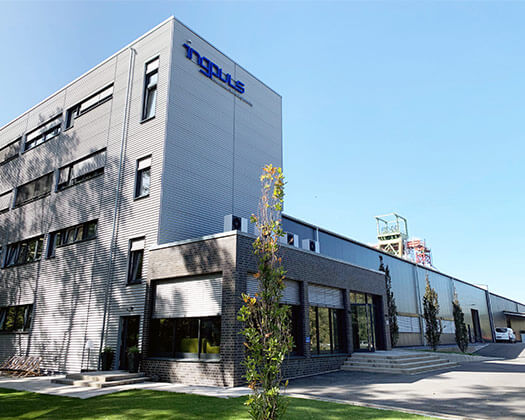
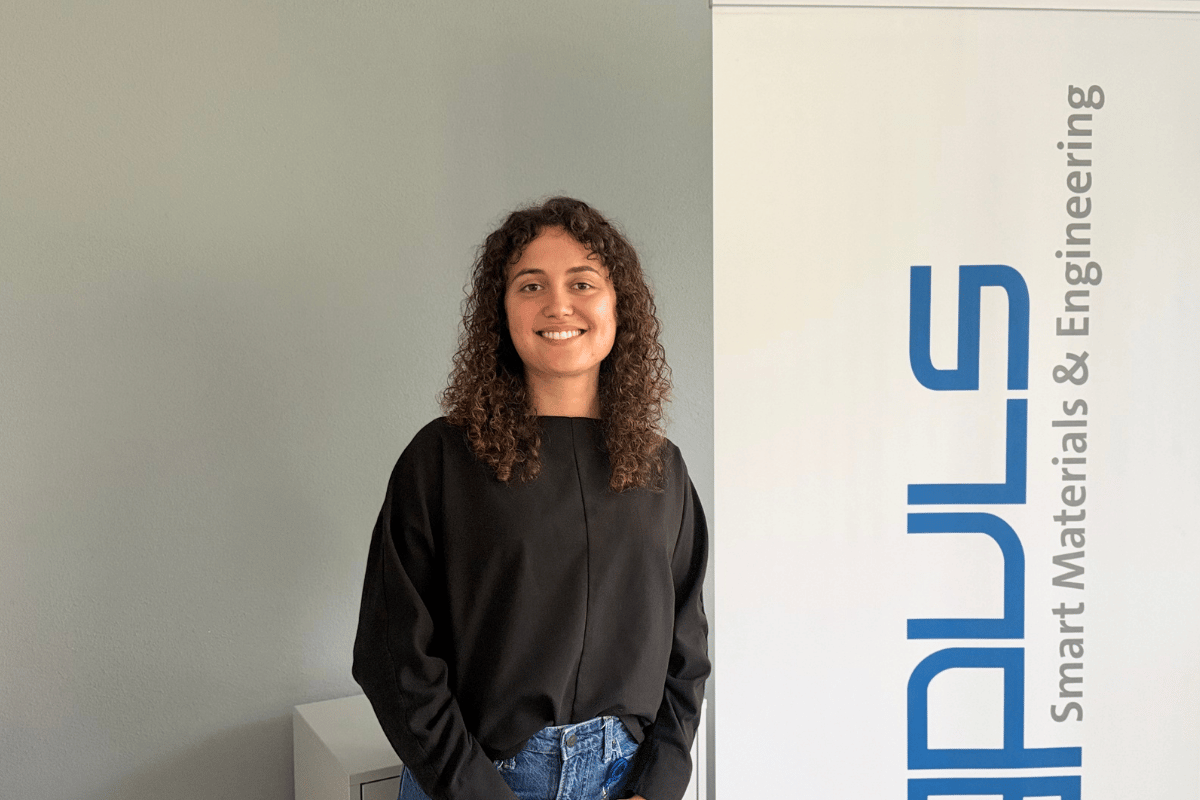
One of the nine doctoral researchers is Sara Bonfanti, who recently joined the Ingpuls team in Bochum, Germany.
Originally from Italy, Sara previously worked on Nitinol-based medical devices during her research at Politecnico di Milano. Within MEDALLOY, she is now investigating the low-cycle fatigue behavior of Nitinol for medical guidewire applications.
Her research focuses on understanding how Nitinol behaves under complex mechanical loading conditions and how this behavior can be predicted more reliably. By combining experimental investigations with numerical simulation models, her work aims to improve the understanding of the mechanical behavior and performance of medical guidewires.
At Ingpuls, Sara focuses on experimental investigations and gains deeper insights into the relationships between alloy composition, material processing and mechanical properties. During the next stages of her PhD, she will further develop her expertise in numerical modeling and finite element analysis at the University of Galway in Ireland.
This combination of industrial materials expertise and academic research is a central element of the MEDALLOY approach.
In Conversation with Sara Bonfanti
What motivates a young researcher to explore the complex behavior of Nitinol? How can industrial expertise and scientific modeling complement each other? And what is it like to move from Italy to Bochum to take part in a European research project?
We spoke with Sara about her scientific background, her research objectives, the opportunities offered by MEDALLOY and her first experiences at Ingpuls.
Meet Sara Bonfanti
Sara Bonfanti | Doctoral Researcher in the MEDALLOY Project at Ingpuls
Originally from Italy, Sara Bonfanti developed her interest in Nitinol-based medical devices during her studies and research at Politecnico di Milano.
As one of nine doctoral researchers in the European MEDALLOY network, she is investigating the mechanical performance of Nitinol guidewires at Ingpuls in Bochum. Her PhD combines experimental materials research at Ingpuls with numerical modeling at the University of Galway in Ireland.
For Sara, MEDALLOY represents not only the next step in her scientific career but also her first professional experience in Germany.
Felix Manhart: You recently joined Ingpuls and moved from Italy to Bochum. What were your first days like?
Sara Bonfanti: My first days were full of new impressions and emotions. Of course, moving to a new country involved a lot of organizing and things to take care of.
So far, however, it has been a really nice experience. Everyone at Ingpuls has been very friendly and has tried to help me with everything. For me, it is not only a new country and a new environment but also my first professional experience. So there are many new things I still need to get used to, but it feels good, and I am looking forward to the time ahead.
I have also already met some of my new colleagues. Now I just need to remember all their names! 😊
Felix Manhart: What originally sparked your interest in Nitinol and shape memory alloys?
Sara Bonfanti: I first learned about shape memory alloys during my bachelor’s studies in a biomaterials course. We explored different applications of shape memory alloys in the biomedical field and investigated how the material’s unique properties can be used in medical devices.
My deeper interest in Nitinol developed later during my research at Politecnico di Milano. There, I worked with Nitinol-based medical devices and performed experimental tests to characterize their mechanical behavior and determine material parameters for numerical models.
What fascinates me about Nitinol is its unique properties, particularly the shape memory effect and biocompatibility. These properties make it especially interesting for minimally invasive and catheter-based procedures.
Felix Manhart: Until now, you have mainly worked with finished Nitinol medical devices. What excites you about taking a closer look at the material itself?
Sara Bonfanti: In my previous work, I mainly focused on Nitinol components and medical devices.
At Ingpuls, I now have the opportunity to become involved much earlier in the process and better understand how factors such as material composition and different processing steps influence the mechanical properties and performance of the final component.
I find this particularly exciting because it allows me to develop a much deeper understanding of the entire process – from the raw material to the finished product and its application.
Felix Manhart: Your PhD focuses on the low-cycle fatigue behavior of Nitinol for guidewire applications. What exactly are you trying to understand better?
Sara Bonfanti: One of the main objectives is to better understand and predict the behavior of Nitinol guidewires under complex loading conditions.
Current computational models are not always able to accurately describe the complex multiaxial and torsional stress states these devices are exposed to. For example, if material parameters are calibrated using a conventional tensile test, the resulting model may not predict the material’s behavior under torsional loading with the same level of accuracy.
We therefore want to better understand which parameters or aspects may still be missing from existing material models. At the same time, we are investigating how material composition and processing could potentially be adjusted to improve the final performance of these devices.
That is why my PhD combines experimental investigations with numerical modeling.
Felix Manhart: Why is this research particularly relevant for medical applications and ultimately for patients?
Sara Bonfanti: Guidewires play an important role in many catheter-based and minimally invasive procedures. Therefore, it is essential to understand their mechanical behavior and predict it reliably.
A better understanding could help prevent problems such as guidewire damage and improve our knowledge of how a guidewire behaves during a medical procedure.
In the long term, improved models could also help physicians select a suitable guidewire for a specific application and better predict its performance during a procedure. Ultimately, this could support physicians and contribute to better treatment outcomes for patients.
Felix Manhart: Your PhD combines experimental research at Ingpuls with computational modeling in Galway. How do these two areas complement each other?
Sara Bonfanti: I think this combination is one of the great strengths of the project.
At Ingpuls, I can focus on the experimental part and benefit from the expertise in materials science, Nitinol and shape memory alloys. In particular, I can learn how the material is manufactured and processed and how these steps influence the final properties of the guidewire.
For the computational modeling part, I will later move to Galway, where I can further develop my knowledge of finite element analysis and material modeling. I will also return to Ingpuls afterwards. This gives me the opportunity to connect both perspectives throughout my PhD.
Felix Manhart: What makes Ingpuls and the MEDALLOY network an interesting environment for your research?
Sara Bonfanti: For me, it is a very valuable combination of different areas of expertise. At Ingpuls, I have the opportunity to better understand the entire journey, from material development and raw material production through the different processing steps to the finished component.
Through the MEDALLOY network and the collaboration with the University of Galway, I can combine this knowledge with computational modeling and finite element analysis.
Bringing together these different perspectives and areas of expertise is what makes the project particularly interesting to me.
Felix Manhart: Looking a few years into the future, what would need to happen for you to say that your PhD has really made a difference?
Sara Bonfanti: If, together with the other doctoral researchers in the MEDALLOY project, we can contribute to a better understanding and prediction of Nitinol behavior, that would already be a major achievement for me.
Regarding my own part of the project, I would particularly like to contribute to improving the computational description of guidewire behavior and the underlying material models.
If the resulting findings or tools could ultimately help clinicians make more informed decisions for a particular procedure or patient, and eventually contribute to better treatment outcomes, I would feel that the research had really made a difference.
Felix Manhart: What does this time at Ingpuls and in Germany mean to you personally?
Sara Bonfanti: I see it not only as a great opportunity for my scientific and professional development but also as an important personal experience.
It is my first time living in Germany. Living abroad, meeting new people, discovering another culture and experiencing different perspectives – all of these are valuable opportunities for personal growth.
I am also looking forward to exploring Bochum, Germany and perhaps other parts of Europe. I hope to travel, discover new places and, of course, meet new people, friends and colleagues.
Overall, I am simply very excited and looking forward to really getting started.
Felix Manhart: Thank you very much, Sara, for your time and for this conversation. We wish you all the best for the journey ahead!
Looking Ahead: Research, Collaboration and Innovation
MEDALLOY demonstrates the potential of European collaboration when different areas of expertise come together across the entire value chain of medical applications.
For Ingpuls, participating in this network means much more than contributing technological expertise. It is also about bringing different perspectives together, supporting the next generation of researchers and jointly exploring new answers to current challenges in Nitinol research and medical technology.
We look forward to supporting Sara throughout her PhD and further strengthening our collaboration with the MEDALLOY partners.
Together, we aim to deepen the understanding of Nitinol and help lay the foundation for the next generation of innovative medical devices.
About MEDALLOY
MEDALLOY (Advanced Nickel-Titanium Alloys for Medical Device Applications) is a European Doctoral Network coordinated by the University of Galway in Ireland.
The project brings together academic, clinical and industrial partners from six countries to advance Nitinol research and train nine doctoral researchers.
Further information: www.medalloy.eu
This project has received funding from the European Union’s Horizon Europe research and innovation programme under the Marie Skłodowska-Curie Actions, grant agreement No. 101227596.
